Service of State
Defence Research and Development Organisation
The Defence Research and Development Organisation is the research-and-development wing of India's Ministry of Defence, tasked with making the armed forces self-reliant in weapons and military systems. Through a network of about fifty laboratories it develops missiles, radars, armour, aircraft systems and electronic warfare kit, and transfers the resulting technology to public- and private-sector producers. DRDO is a seat of power because it is the state's instrument for indigenising the hardware of national defence — the point where strategic-autonomy policy meets the physics of building weapons.
Updated
- Headquarters
- DRDO Bhawan, New Delhi
- Parent
- Department of Defence R&D, Ministry of Defence
- Budget FY2026-27
- ₹29,100.25 crore (capital ₹17,250.25 crore)
- Founded
- 1 January 1958
Role
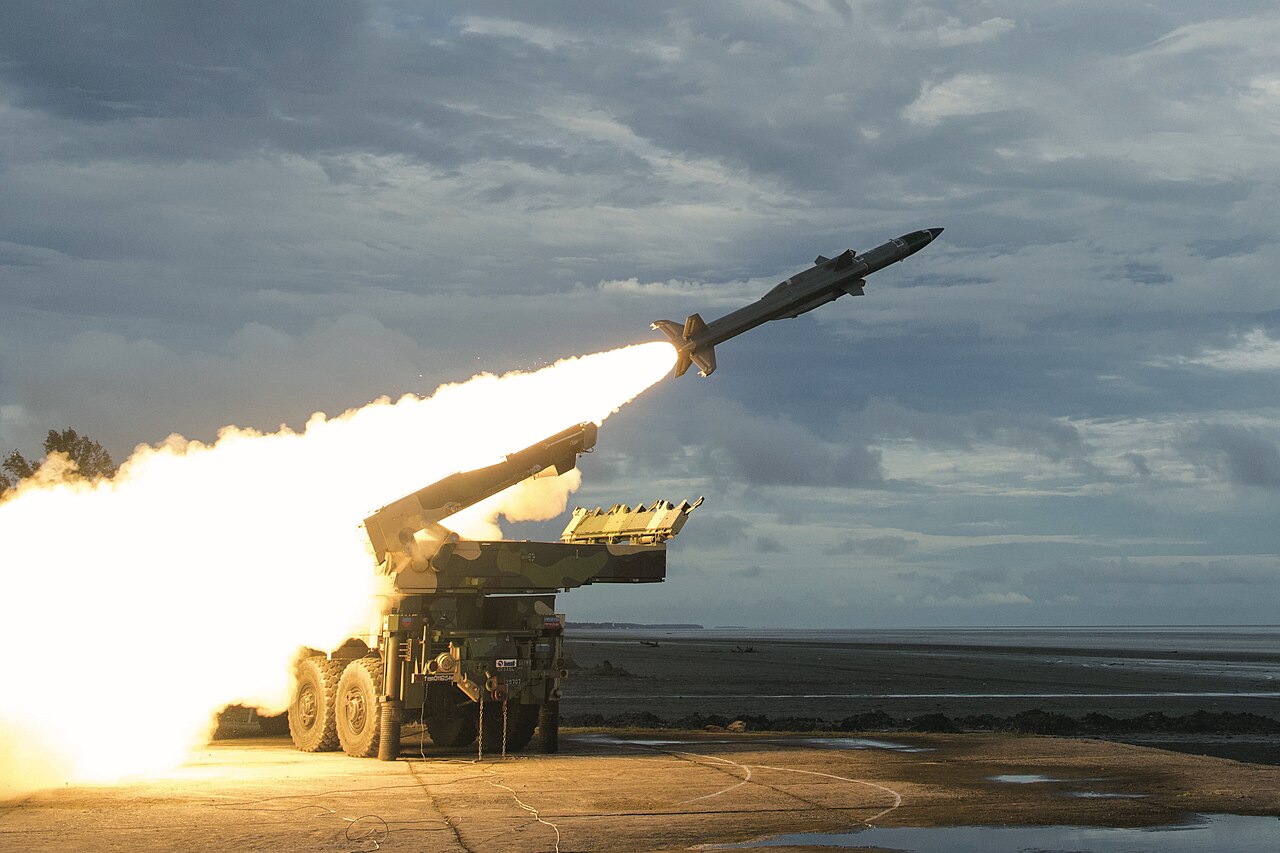
The Defence Research and Development Organisation is the research-and-development arm of the Ministry of Defence and the central institution through which the Indian state tries to build, rather than buy, the weapons its forces use. It sits under the Department of Defence Research and Development, one of the departments of the Ministry of Defence, and is headed by the Chairman of DRDO, who also serves as Secretary of that department and as the government’s principal adviser on defence science. Through a network of roughly fifty specialised laboratories — spanning missiles, aeronautics, armaments, electronics, naval systems, materials and life sciences — DRDO designs systems, oversees their development and qualification, and licenses the technology to public-sector undertakings and private firms that manufacture at scale.
Its work is where India’s strategic-autonomy ambition becomes concrete hardware. DRDO owns or anchors the country’s strategic missile programmes (the Agni and Prithvi families and hypersonic development), its air-defence and tactical missiles (Akash, Astra, the anti-tank and quick-reaction systems), and a broad base of radar, electronic-warfare and platform technology; it is a partner in the Indo-Russian BrahMos venture and the parent of the Aeronautical Development Agency behind the Tejas fighter. Because indigenous capability reduces dependence on foreign suppliers in a crisis, DRDO is simultaneously a scientific body, an industrial-policy lever and a security asset — which is also why its budget, delivery record and internal structure are recurrent subjects of government review.
Desk maintained by IndiaStand editorial cycles. Officeholders are transient; this dossier tracks the institution.
Timeline since 1947
- reference
DRDO formed
The Defence Research and Development Organisation was created by amalgamating the Defence Science Organisation with the technical development establishments of the armed forces, to give India an in-house military R&D capability.
- reference
Integrated Guided Missile Development Programme launched
The IGMDP, begun in 1982-83, set out to develop five indigenous missile classes — Prithvi, Agni, Akash, Trishul and Nag — and became the spine of India's later missile arsenal.
- official
Rama Rao Committee constituted to review DRDO's functioning
The government set up a committee chaired by the former Secretary, Department of Science and Technology, Dr P Rama Rao, to review DRDO's organisational structure and recommend changes to its institutional, managerial, administrative and financial arrangements; after year-long deliberations the committee submitted its report on 7 February 2008.
- reference
Agni-3 intermediate-range missile flight-tested successfully
The Agni-3 was flight-tested successfully from Wheeler Island after its maiden trial in July 2006 failed, extending the reach of the Agni family beyond the Agni-2 class and anchoring the strategic-missile line DRDO carried forward after the IGMDP.
- reference
IGMDP formally concluded
The programme was declared complete after its core missiles had been developed, and DRDO moved to a system of individual missile projects and mission-mode programmes.
- official
Ministry of Defence approves major DRDO restructuring
The Ministry of Defence approved a package of measures to restructure DRDO: a Defence Technology Commission chaired by the Defence Minister, decentralisation of DRDO management, a leaner organisation through merging some laboratories with other publicly funded institutions of similar discipline, an HR consultant to revamp the HR structure, and a commercial arm; the decisions also continued the Aeronautical Development Agency, the Kaveri aero-engine programme, and development of MBT Arjun Mk-II and Akash Mk-II.
- official
Implementation Committee stood up for the Rama Rao reforms
The Ministry of Defence told Parliament that, after the government examined the Rama Rao Committee report and directed implementation, DRDO appointed an Implementation Committee to work out the finer details, with the process guided by an Advisory Committee; private-sector participation was framed as primarily in productionising developed systems through concurrent engineering.
- reference
Agni-5 makes maiden flight
DRDO conducted the first flight test of the Agni-5, the longest-range missile of the Agni family, from Wheeler Island off Odisha; the missile became the platform on which canisterisation and, later, multiple-warhead work was built.
- official
Mission Shakti: DRDO destroys a live satellite in low Earth orbit
DRDO conducted an anti-satellite missile test from Dr APJ Abdul Kalam Island in Odisha in which a DRDO-developed Ballistic Missile Defence interceptor — a three-stage missile with two solid rocket boosters — engaged an Indian target satellite in low Earth orbit in hit-to-kill mode; the Ministry of Defence said range-sensor tracking data confirmed the mission met all its objectives.
- reference
Five DRDO Young Scientists Laboratories dedicated
Five DRDO laboratories staffed by young scientists were dedicated to the nation at Bengaluru, each mandated on a frontier area — artificial intelligence, quantum technologies, cognitive technologies, asymmetric technologies and smart materials — and sited at Bengaluru, Mumbai, Chennai, Kolkata and Hyderabad.
- official
DRDO ring-fences 108 systems for Indian industry to design and build
DRDO identified 108 systems and subsystems — from mini and micro UAVs to metallic bridging and night-vision sights — for design and development by Indian industry only, with DRDO providing design, development and testing support on requirement; the Ministry of Defence stated DRDO's industry base then consisted of 1,800 MSMEs alongside DPSUs, ordnance factories and large industry, and that DRDO already offered technology to industry at nominal cost with free access to its patents.
- reference
DRDO's 2-DG anti-COVID drug released for emergency use
2-deoxy-D-glucose, developed by DRDO's Institute of Nuclear Medicine and Allied Sciences with Dr Reddy's Laboratories, was cleared for emergency use as an adjunct therapy in moderate-to-severe COVID-19 patients — an unusual excursion of the defence R&D estate into civil public health. Efficacy claims for the drug were contested and it was later withdrawn.
- reference
AD-1 interceptor flight-tested for Phase-II ballistic missile defence
DRDO flight-tested the AD-1, a long-range interceptor designed for both low-exo-atmospheric and endo-atmospheric interception of ballistic missiles, from Dr APJ Abdul Kalam Island — extending the ballistic-missile-defence programme beyond the Phase-I interceptors used in the 2019 anti-satellite test.
- gdelt
Committee set up to restructure DRDO
The government set up a nine-member committee chaired by former Principal Scientific Adviser K. VijayRaghavan, with the push reported as coming from the Prime Minister's Office, to recommend restructuring DRDO — including rationalising the number of laboratories and sharpening its research focus. The committee's report, 'Redefining Defence Research and Development,' followed later in 2023.
- official
Mission Divyastra: Agni-5 flies with MIRV technology
DRDO conducted the first successful flight test of an indigenously developed Agni-5 carrying Multiple Independently Targetable Re-Entry Vehicle technology from Dr APJ Abdul Kalam Island; the Ministry of Defence said telemetry and radar stations tracked multiple re-entry vehicles and the mission accomplished its designed parameters.
- official
First long-range hypersonic missile flight-tested
DRDO conducted the flight-trial of India's first long-range hypersonic missile off the Odisha coast, describing it as designed to carry payloads to ranges greater than 1,500 km; the Ministry of Defence characterised the test as placing India in a group of select nations with such capability.
- official
Indigenous air defence used in Operation Sindoor
During the May 2025 India–Pakistan military exchange, air-defence systems including the DRDO-developed Akash surface-to-air missile and the Akashteer air-defence control-and-reporting network — which Bharat Electronics manufactures in collaboration with DRDO and ISRO — were used against drones and aerial threats. DRDO published a news compendium citing the operation as validation of indigenous air defence; that assessment is attributed to DRDO and the armed forces.
- official
Astra BVRAAM tested with indigenous RF seeker
DRDO and the Indian Air Force flight-tested the Astra beyond-visual-range air-to-air missile fitted with an indigenously developed radio-frequency seeker from a Su-30 Mk-I, with the Ministry of Defence stating that two launches destroyed high-speed aerial targets and that all subsystems, including the seeker, performed to expectation.
- official
Technology Development Fund gets ₹500 crore deep-tech corpus
The Ministry of Defence approved an additional corpus of ₹500 crore under the DRDO-executed Technology Development Fund scheme to fund deep-tech and cutting-edge projects as separate verticals; nine projects had been launched under the initiative and nine industry partners were engaged in four projects sanctioned through DRDO Industry-Academia Centres of Excellence under DRDO's Grants-in-Aid scheme.
- official
Agni-Prime launched from a rail-mobile launcher
The intermediate-range Agni-Prime missile was test-fired from a rail-based mobile launcher together with the Strategic Forces Command, described by the Ministry of Defence as a first-of-its-kind launch adding rail mobility to the canisterised system.
- official
DRDO budget raised for FY2026-27
DRDO's allocation was raised to ₹29,100.25 crore for FY2026-27 from ₹26,816.82 crore in FY2025-26, with ₹17,250.25 crore earmarked for capital expenditure, within a Ministry of Defence allocation the government described as an all-time high of about ₹7.85 lakh crore.
Frequently asked
- What is Defence Research and Development Organisation?
- The Defence Research and Development Organisation is the research-and-development wing of India's Ministry of Defence, tasked with making the armed forces self-reliant in weapons and military systems. Through a network of about fifty laboratories it develops missiles, radars, armour, aircraft systems and electronic warfare kit, and transfers the resulting technology to public- and private-sector producers. DRDO is a seat of power because it is the state's instrument for indigenising the hardware of national defence — the point where strategic-autonomy policy meets the physics of building weapons.
- When was Defence Research and Development Organisation established?
- Defence Research and Development Organisation was established 1958-01-01.
- What does Defence Research and Development Organisation do?
- Its remit covers Strategic and tactical missile systems (Agni, Prithvi, Akash, Astra, BrahMos programme, hypersonics), Air-defence, radar, electronic-warfare and command-and-control systems, Combat aircraft, aero-engine, naval and armour/land-systems research, Technology transfer to public and private defence producers, Advising the Ministry of Defence on defence science and technology.
- What is the latest on Defence Research and Development Organisation?
- As of 2026-07-06: DRDO budget raised for FY2026-27. DRDO's allocation was raised to ₹29,100.25 crore for FY2026-27 from ₹26,816.82 crore in FY2025-26, with ₹17,250.25 crore earmarked for capital expenditure, within a Ministry of Defence allocation the government described as an all-time high of about ₹7.85 lakh crore.
Official sources
The government's own pages for this institution — go straight to the primary.
-
Canonical home of the Defence Research and Development Organisation, Ministry of Defence.
drdo.gov.in/drdo/en/
- Press Releases press
DRDO's own dated press-release archive (trials, inductions, handovers).
drdo.gov.in/drdo/en/documents/press-release
- Publications reports
DRDO Newsletter, Technology Focus, DRDO Samachar, monographs and journals — the organisation's published-record hub.
drdo.gov.in/drdo/en/documents/publication
-
MoD scheme executed by DRDO funding Indian industry/MSMEs for defence technology development; carries scheme documents and project calls.
tdf.drdo.gov.in/
- DRDO laboratory network (locations) department
Official statement of where DRDO's constituent laboratories/establishments are situated across the country.
drdo.gov.in/drdo/en/where-are-labs-drdo-situated