State / UT
Chandigarh
Chandigarh is a Union Territory of the Indian Republic, constituted on 1 November 1966 under the Punjab Reorganisation Act, 1966, on the same appointed day that Haryana was carved out of Punjab. It is the only unit of the Union that serves as the shared capital of two states, Punjab and Haryana, while itself belonging to neither. It has no legislative assembly and no council of ministers: it is administered directly by the Union under Article 239 through an Administrator, an office held concurrently by the Governor of Punjab since 1984, and it sends one member to the Lok Sabha. Its 2011 Census population was 1,055,450 across 114 square kilometres, making it one of the smallest and most densely settled territories in the Union, and its unresolved status as a capital claimed by Punjab keeps it a standing item of federal dispute rather than a settled administrative arrangement.
Updated
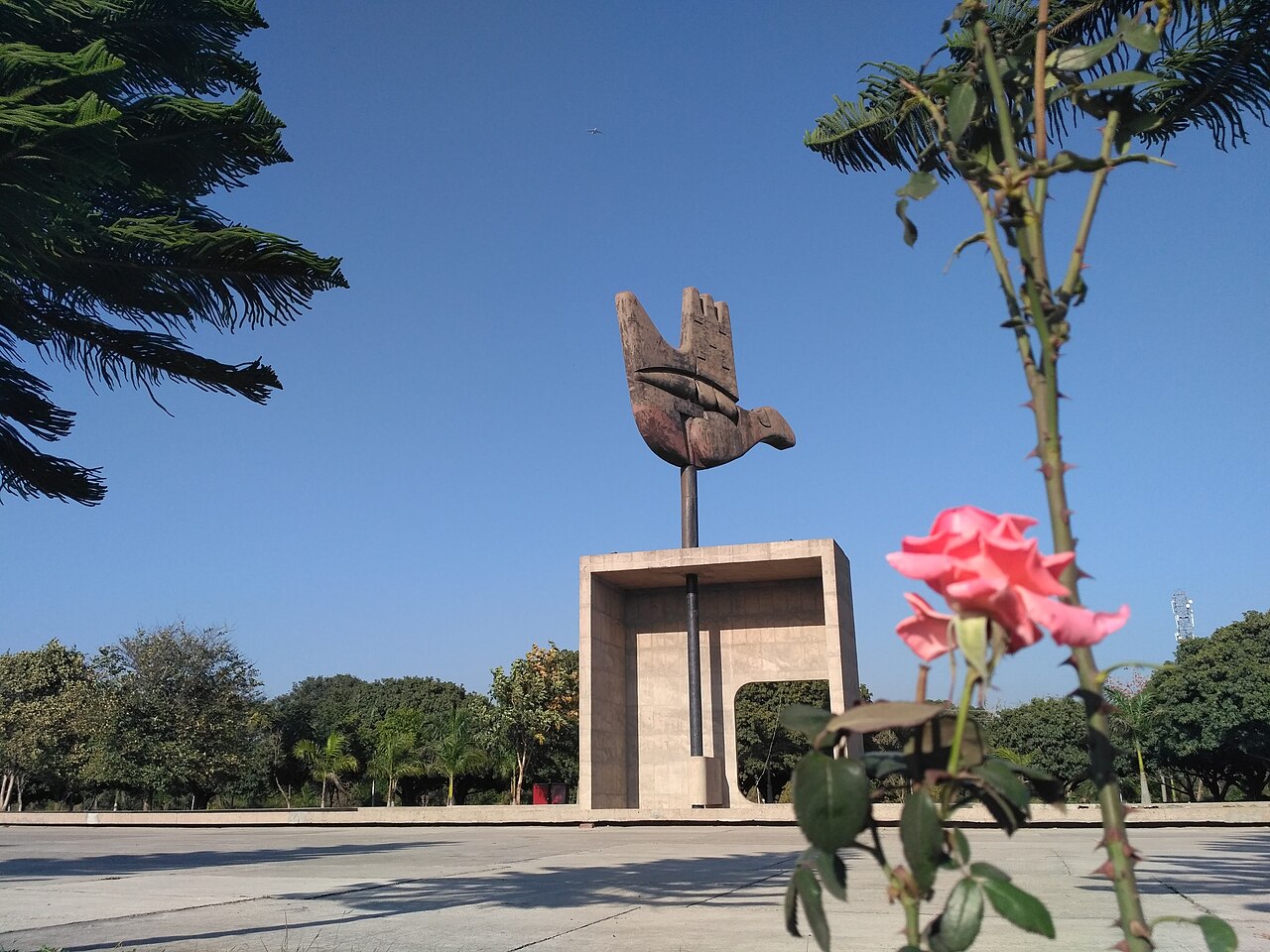
- Capital
- Chandigarh (the territory is a single city-district; it is simultaneously the capital of Punjab and of Haryana)
- Formed
- 1 November 1966, under the Punjab Reorganisation Act, 1966
- Legislature
- None — no legislative assembly; the 35-member elected Municipal Corporation is the only elected body
- Lok Sabha seats
- 1
- Population (2011 Census)
- 1,055,450
- Area
- 114 sq km; 1 district; 97.25% urban (2011 Census)
- Administration
- Article 239 — Administrator appointed by the President; the Governor of Punjab has held the office concurrently since 1984
- Constitutional note
- Not listed under Article 240; the President therefore lacks the regulation-making power available for several other Union Territories
Role
Chandigarh is the Republic’s clearest case of a territory defined by what it is not. It is not a state: it has no legislative assembly, no chief minister and no council of ministers, and the executive power exercised over its 114 square kilometres flows from the President under Article 239 through an Administrator, routed administratively via the Ministry of Home Affairs. It is not a Union Territory with a legislature, like Delhi or Puducherry. And it is not listed under Article 240, so the President does not hold the regulation-making power available for the Andaman and Nicobar Islands, Lakshadweep, Dadra and Nagar Haveli and Daman and Diu, or Puducherry — a gap the Centre moved to close in 2025 and then set aside. Its only elected government is municipal: a 35-member corporation whose mayor is chosen annually by an indirect vote among councillors, a mechanism that produced the electoral-integrity dispute the Supreme Court decided in February 2024. One Lok Sabha seat is the territory’s entire representation in Parliament; there is no Rajya Sabha seat. Since 1984 the Administrator has been the Governor of Punjab, which means the same office-holder is the constitutional head of a state that formally claims the territory and the executive head of the territory resisting that claim.
What makes Chandigarh structurally distinctive is that its status was designed as provisional and has never been resolved. The Punjab Reorganisation Act, 1966 placed the purpose-built capital outside both successor states so that neither Punjab nor Haryana would lose it, and both governments still run their secretariats, assemblies and a common High Court from within a territory neither administers. The Rajiv–Longowal Accord of 1985 committed the Union to transferring Chandigarh to Punjab in exchange for Hindi-speaking villages going to Haryana; three commissions failed to settle the compensating territory and the transfer was suspended indefinitely in 1986. That unclosed commitment is the reason every administrative change here is read federally rather than locally: the 2022 shift of administration employees from Punjab service rules to central rules triggered a Punjab Assembly resolution demanding the city, and the 2025 Article 240 amendment proposal — which would have permitted a dedicated Lieutenant Governor and presidential regulations — was opposed across Punjab’s political spectrum as a step toward severing the city from the state’s claim. As of 2026-07-17 the territory remains governed under Article 239 by the Punjab Governor as Administrator, with the amendment not introduced. Economically it is an administrative and services city rather than a productive base, with per-capita income among the highest in the Union and a population that is almost entirely urban; its weight in the federation comes not from its size but from its position as contested constitutional property.
Desk maintained by IndiaStand editorial cycles. Officeholders are transient; this dossier tracks the institution.
Timeline since 1947
- reference
Chandigarh constituted a Union Territory on the appointed day of the Punjab Reorganisation Act, 1966
The Act, enacted 18 September 1966, divided the bilingual state of Punjab and created Haryana. Rather than allot the newly built capital to either successor state, Parliament made Chandigarh a Union Territory serving as the provisional shared capital of both.
- reference
Governor of Punjab designated Administrator of Chandigarh
The Article 239 Administrator's office was merged with the Punjab Governorship, so that one office-holder heads both a state's constitutional headship and the neighbouring territory's executive. The arrangement has continued since.
- reference
Rajiv–Longowal Accord commits Chandigarh to Punjab; the transfer is never executed
The accord provided that Chandigarh would go to Punjab, with Hindi-speaking villages transferred to Haryana in lieu, on 26 January 1986. Successive commissions failed to agree on the compensating territory and the Union government suspended the transfer indefinitely in July 1986. The commitment remains on the record and unimplemented.
- reference
Elected municipal government established
The Punjab Municipal Corporation Law (Extension to Chandigarh) Act, 1994 extended the Punjab Municipal Corporation Act, 1976 to the territory, creating the Municipal Corporation of Chandigarh — 35 elected councillors, nine nominated by the Administrator, and the sitting MP, with the mayor elected annually by the house.
- reference
Census records 1,055,450 residents in 114 sq km
Density of roughly 9,258 persons per sq km, 97.25% urban, literacy 86.05%, sex ratio 818 females per 1,000 males — one of the lowest in the Union. The territory is a single district.
- reference
Central civil service rules extended to Chandigarh Administration employees; Punjab Assembly passes a resolution against it
Employees of the administration were moved from Punjab service rules to central service rules, notified in late March 2022. Punjab convened a special session and passed a resolution by voice vote seeking the immediate transfer of Chandigarh to the state, terming the move an encroachment on Punjab's rights. The change was defended as improving service conditions, including retirement age and child care leave.
- reference
Supreme Court sets aside the Chandigarh mayoral election result
A three-judge bench found that the presiding officer had himself defaced eight ballots during counting to invalidate them, called the conduct patently illegal, ordered the eight votes counted as valid, and under Article 142 declared the losing candidate the validly elected mayor. The judgment is the leading recent authority on the integrity of indirect municipal elections.
- official
Chandigarh declared the first Union Territory to fully implement the three new criminal laws
The Union Home Ministry announced full implementation of the Bharatiya Nyaya Sanhita, Bharatiya Nagarik Suraksha Sanhita and Bharatiya Sakshya Adhiniyam across the territory's police, prosecution and courts, ahead of every state and other UT. Direct Union administration and a single-district footprint made the territory a pilot for central legal reform.
- reference
Constitution (131st Amendment) Bill to bring Chandigarh under Article 240 is shelved
The Centre had proposed inserting Chandigarh into Article 240, which would empower the President to make regulations for the territory with the force of an Act of Parliament and open the way to a dedicated Lieutenant Governor in place of the Punjab Governor. The proposal drew united opposition across Punjab's parties as an attack on the state's claim to the city; the Home Ministry stated the bill would not be introduced in the Winter Session.
Frequently asked
- What is Chandigarh?
- Chandigarh is a Union Territory of the Indian Republic, constituted on 1 November 1966 under the Punjab Reorganisation Act, 1966, on the same appointed day that Haryana was carved out of Punjab. It is the only unit of the Union that serves as the shared capital of two states, Punjab and Haryana, while itself belonging to neither. It has no legislative assembly and no council of ministers: it is administered directly by the Union under Article 239 through an Administrator, an office held concurrently by the Governor of Punjab since 1984, and it sends one member to the Lok Sabha. Its 2011 Census population was 1,055,450 across 114 square kilometres, making it one of the smallest and most densely settled territories in the Union, and its unresolved status as a capital claimed by Punjab keeps it a standing item of federal dispute rather than a settled administrative arrangement.
- When was Chandigarh established?
- Chandigarh was established 1966-11-01.
- What does Chandigarh do?
- Its remit covers Direct Union administration under Article 239: the Administrator exercises executive authority over the territory, with departments run by an Adviser and a UT cadre rather than an elected state cabinet, Law and order, land, urban planning, health, education and transport — subjects that in a state would sit with a state government are discharged here by the Chandigarh Administration under Union control, Host of the shared capital complex: the secretariats, legislative assembly buildings and High Court serving Punjab and Haryana sit within the territory but are not answerable to it, Municipal Corporation of Chandigarh — 35 elected ward councillors plus nine nominated councillors and the sitting MP; the only directly elected tier of government in the territory, One Lok Sabha constituency; no Rajya Sabha representation and no legislative assembly.
- What is the latest on Chandigarh?
- As of 2026-07-17: Constitution (131st Amendment) Bill to bring Chandigarh under Article 240 is shelved. The Centre had proposed inserting Chandigarh into Article 240, which would empower the President to make regulations for the territory with the force of an Act of Parliament and open the way to a dedicated Lieutenant Governor in place of the Punjab Governor. The proposal drew united opposition across Punjab's parties as an attack on the state's claim to the city; the Home Ministry stated the bill would not be introduced in the Winter Session.
Official sources
The government's own pages for this institution — go straight to the primary.
-
Official portal of the UT administration; departments, notifications and administrative orders.
chandigarh.gov.in/
-
Electoral rolls and results for the single Chandigarh parliamentary constituency.
ceochandigarh.gov.in/
-
Annual statistical compendium published by the administration.
chandigarh.gov.in/statistical-abstract-of-chandigarh-2023
-
GSDP, NSDP and per-capita income series at current and constant prices, 2011-12 to 2022-23.
chandigarh.gov.in/sites/default/files/stat2023/stat23-sdp.pd
- MHA — Union Territories Division department
The Union ministry through which Chandigarh's administration is routed.
www.mha.gov.in/en/divisionofmha/union-territories-division