State / UT
Himachal Pradesh
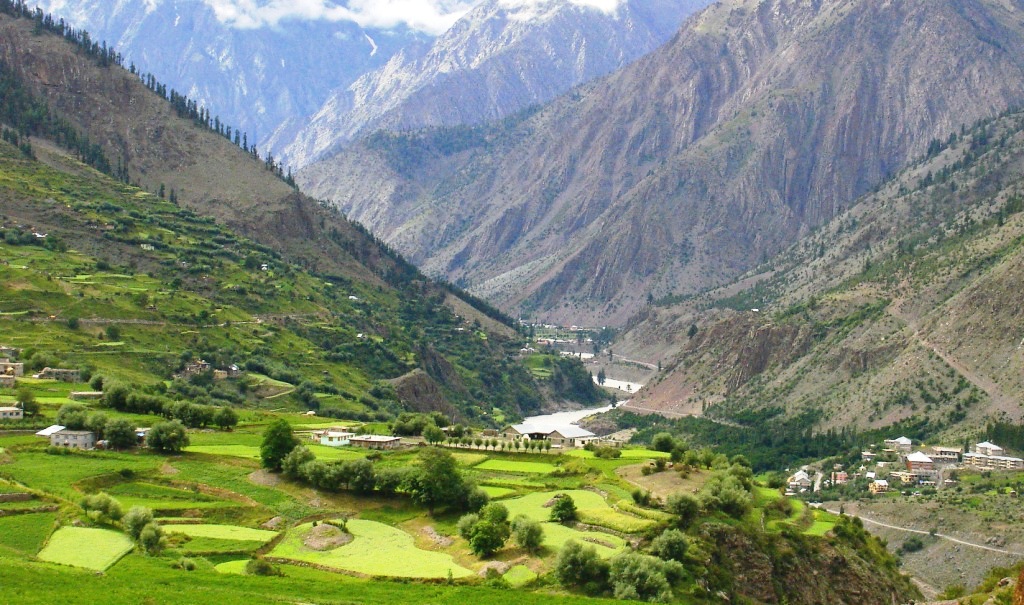
Himachal Pradesh is a state in the Indian Union, formed as a Chief Commissioner's Province on 15 April 1948 by integrating some thirty princely hill states, made a Union Territory in 1956, and admitted as India's eighteenth state on 25 January 1971 under the State of Himachal Pradesh Act, 1970. It is a small-weight state by federal arithmetic — a 68-seat unicameral Vidhan Sabha, four Lok Sabha seats and three Rajya Sabha seats, on a 2011 Census population of 6.86 million spread across 55,673 sq km of Himalaya. Its structural distinction is fiscal rather than constitutional: a mountain economy that is roughly 90 per cent rural, with a salary-and-pension bill that consumes a large share of revenue receipts, leaves it structurally dependent on Union transfers, and its 2025-26 budget still projected a revenue deficit of 2.5 per cent of GSDP. The state runs the standard State List — law and order, land, agriculture, health, education — but does so on terrain where hydropower, horticulture and disaster exposure, not manufacturing scale, set the fiscal terms.
Updated
- Capital
- Shimla (summer); Dharamshala (winter capital)
- Formed
- Chief Commissioner's Province 15 April 1948; Union Territory 1 November 1956; statehood 25 January 1971
- Legislature
- Unicameral — Vidhan Sabha, 68 seats (17 reserved SC, 3 reserved ST), five-year term
- Lok Sabha seats
- 4
- Rajya Sabha seats
- 3
- Population (2011 Census)
- 6,864,602 (89.97% rural; density 123/sq km; sex ratio 972; literacy 82.80%)
- Area
- 55,673 sq km; 12 districts
- GSDP (2025-26 BE)
- Rs 2,55,636 crore at current prices
- Fiscal position (2025-26 BE)
- Revenue deficit 2.5% of GSDP; fiscal deficit 4% of GSDP
Role
Himachal Pradesh is a full-fledged state of the Indian Union with a 68-seat unicameral Vidhan Sabha, a Council of Ministers headed by the current Chief Minister and responsible to that assembly, a Governor as the Union’s constitutional head of the state executive, and its own High Court at Shimla. Its route to that status was unusually staged: a Chief Commissioner’s Province stitched from some thirty princely hill states in 1948, a Union Territory from 1956, enlarged by the transfer of Simla, Kangra, Kullu and Lahaul and Spiti out of Punjab in 1966, and only then a state in 1971. That sequence matters institutionally. Himachal is not a fragment of a larger predecessor state that broke away; it was assembled centrally and then handed self-government, and it carries none of the Article 371 entrenchments that mark the Union’s other Himalayan and frontier accessions. What protects its distinctiveness is ordinary state law — most notably a land-transfer regime that constrains purchase of agricultural land by non-agriculturists — which is to say, protection that the state legislature itself sustains rather than the Constitution.
In federal arithmetic the state is light and, on its own terms, dependent. Four Lok Sabha seats and three Rajya Sabha seats give it minimal leverage in Parliament; a 2011 Census population of 6.86 million, roughly ninety per cent rural, spread over 55,673 sq km of mountain, gives it a service-delivery cost structure that flat states do not face. Its social indicators run ahead of its income — literacy at 82.80 per cent in 2011, a sex ratio of 972 — which is the state’s standing argument for its own governance capacity. Its fiscal position is the standing counter-argument: the 2025-26 budget projected a revenue deficit of 2.5 per cent of GSDP and a fiscal deficit of 4 per cent on a GSDP of about Rs 2.56 lakh crore, with committed salary and pension spending consuming most of what the state raises and the 2023 restoration of the Old Pension Scheme adding to that commitment. The 2023 monsoon disaster, which killed at least 330 people and for which the state claimed some Rs 10,000 crore in losses, showed the other half of the equation — recurring capital destruction that a small hill economy cannot self-insure against. The relationship with the Centre therefore runs primarily through the finance channel: Finance Commission transfers, revenue-deficit grants, borrowing limits and disaster relief windows are where Himachal’s politics with Delhi actually happens, more than through any constitutional autonomy question. Its endowments — hydropower on the Sutlej, Beas, Ravi and Chenab, and an apple economy that anchors rural income — are the assets it negotiates with.
Desk maintained by IndiaStand editorial cycles. Officeholders are transient; this dossier tracks the institution.
Timeline since 1947
- reference
Himachal Pradesh created as a Chief Commissioner's Province
Roughly thirty princely hill states of the erstwhile Punjab Hill States agency were integrated into a single centrally administered unit — the origin of the state as a distinct administrative entity rather than a residue of Punjab.
- reference
Reconstituted as a Union Territory
In the States Reorganisation settlement Himachal Pradesh became a Union Territory — administered by the Centre, without full statehood or a state legislature of its own standing.
- reference
Punjab Reorganisation Act transfers the hill districts to Himachal
Simla, Kangra, Kullu and Lahaul and Spiti were transferred from Punjab to Himachal Pradesh. This roughly doubled the territory and gave the unit the geographic and demographic mass that made the statehood claim viable.
- reference
Statehood under the State of Himachal Pradesh Act, 1970
Himachal Pradesh became the eighteenth state of the Union, acquiring a Vidhan Sabha, a Council of Ministers responsible to it, and a Governor as the Union's constitutional head of the state executive. Unlike several other hill and frontier states, it carries no Article 371 special-provision entrenchment; its distinctiveness is statutory and fiscal, not constitutional.
- reference
Census records a 6.86 million, overwhelmingly rural state
The 2011 Census counted 6,864,602 people at a density of 123 per sq km, with 89.97 per cent living in rural areas — among the most rural populations in the Union — a sex ratio of 972 and literacy of 82.80 per cent. Decadal growth had slowed to 12.94 per cent from 17.53 per cent.
- reference
Dharamshala designated the winter capital
The state formalised a dual-capital arrangement, with the Vidhan Sabha's winter session held at Dharamshala in Kangra and the summer session at Shimla — an institutional acknowledgement of the Kangra region's demographic weight.
- reference
Fourteenth Vidhan Sabha elected
Polling for all 68 seats was held in a single phase, returning the Indian National Congress with 40 seats against the Bharatiya Janata Party's 28. The state has a long-observed pattern of alternating single-party majorities rather than coalition government.
- reference
Restoration of the Old Pension Scheme announced
The state government announced a return to the Old Pension Scheme, covering roughly 1.6 lakh serving employees and 1.3 lakh pensioners; NPS deductions were discontinued from April 2023 and eligibility extended to those who retired after 15 May 2003. The decision was taken against a salary-and-pension bill already reported at around 63 per cent of revenue receipts, and it is the central fact of the state's contested fiscal position.
- reference
Monsoon disaster exposes the state's structural risk
Floods and landslides killed at least 330 people in Himachal Pradesh over the 2023 season, with roughly 9,600 houses damaged and over 1,000 roads blocked. The state government put losses at about Rs 10,000 crore — a figure it advanced in seeking Union relief, and one that illustrates how disaster exposure, not policy choice alone, drives the state's dependence on central transfers.
- reference
Budget 2025-26 keeps the state in revenue deficit
The state budgeted expenditure of Rs 52,709 crore (excluding debt repayment) against receipts of Rs 42,371 crore (excluding borrowings), on a projected GSDP of Rs 2,55,636 crore — a revenue deficit of 2.5 per cent of GSDP and a fiscal deficit target of 4 per cent. A state that still cannot fund its current spending from current revenue remains, structurally, a transfer-dependent unit of the federation.
Frequently asked
- What is Himachal Pradesh?
- Himachal Pradesh is a state in the Indian Union, formed as a Chief Commissioner's Province on 15 April 1948 by integrating some thirty princely hill states, made a Union Territory in 1956, and admitted as India's eighteenth state on 25 January 1971 under the State of Himachal Pradesh Act, 1970. It is a small-weight state by federal arithmetic — a 68-seat unicameral Vidhan Sabha, four Lok Sabha seats and three Rajya Sabha seats, on a 2011 Census population of 6.86 million spread across 55,673 sq km of Himalaya. Its structural distinction is fiscal rather than constitutional: a mountain economy that is roughly 90 per cent rural, with a salary-and-pension bill that consumes a large share of revenue receipts, leaves it structurally dependent on Union transfers, and its 2025-26 budget still projected a revenue deficit of 2.5 per cent of GSDP. The state runs the standard State List — law and order, land, agriculture, health, education — but does so on terrain where hydropower, horticulture and disaster exposure, not manufacturing scale, set the fiscal terms.
- When was Himachal Pradesh established?
- Himachal Pradesh was established 1971-01-25.
- What does Himachal Pradesh do?
- Its remit covers Law and order, police and prisons under the State List, administered through 12 districts grouped into the Shimla, Kangra and Mandi divisions, Land, revenue and tenancy administration — including a restrictive land-transfer regime that limits acquisition of agricultural land by non-agriculturists, Agriculture and horticulture, most consequentially the apple economy, on which a large share of rural incomes turns, Health and school education, sectors in which the state has historically outperformed its per-capita income peers, Power: hydroelectric generation on the Sutlej, Beas, Ravi and Chenab basins, and the royalty/free-power arrangements that flow from it, Disaster management for a monsoon- and landslide-exposed Himalayan terrain, run against Union relief windows, A dual-capital legislature: summer sessions at Shimla, winter sessions at Dharamshala.
- What is the latest on Himachal Pradesh?
- As of 2026-07-17: Budget 2025-26 keeps the state in revenue deficit. The state budgeted expenditure of Rs 52,709 crore (excluding debt repayment) against receipts of Rs 42,371 crore (excluding borrowings), on a projected GSDP of Rs 2,55,636 crore — a revenue deficit of 2.5 per cent of GSDP and a fiscal deficit target of 4 per cent. A state that still cannot fund its current spending from current revenue remains, structurally, a transfer-dependent unit of the federation.
Official sources
The government's own pages for this institution — go straight to the primary.
-
Official web portal; departmental directory, acts and rules, citizen services.
himachal.nic.in/
- Himachal Pradesh Vidhan Sabha (NeVA) legislation
Assembly proceedings, members and business under the National e-Vidhan Application.
hpvs.neva.gov.in/
-
State Economic Survey and statistical publications.
himachalservices.nic.in/economics/
-
The state's constitutional court at Shimla.
highcourt.hp.gov.in/
-
Office of the Governor — the Union's constitutional head of the state executive.
himachalrajbhavan.nic.in/
-
Independent analysis of the state's receipts, expenditure and deficits.
prsindia.org/budgets/states/himachal-pradesh-budget-analysis