State / UT
Kerala
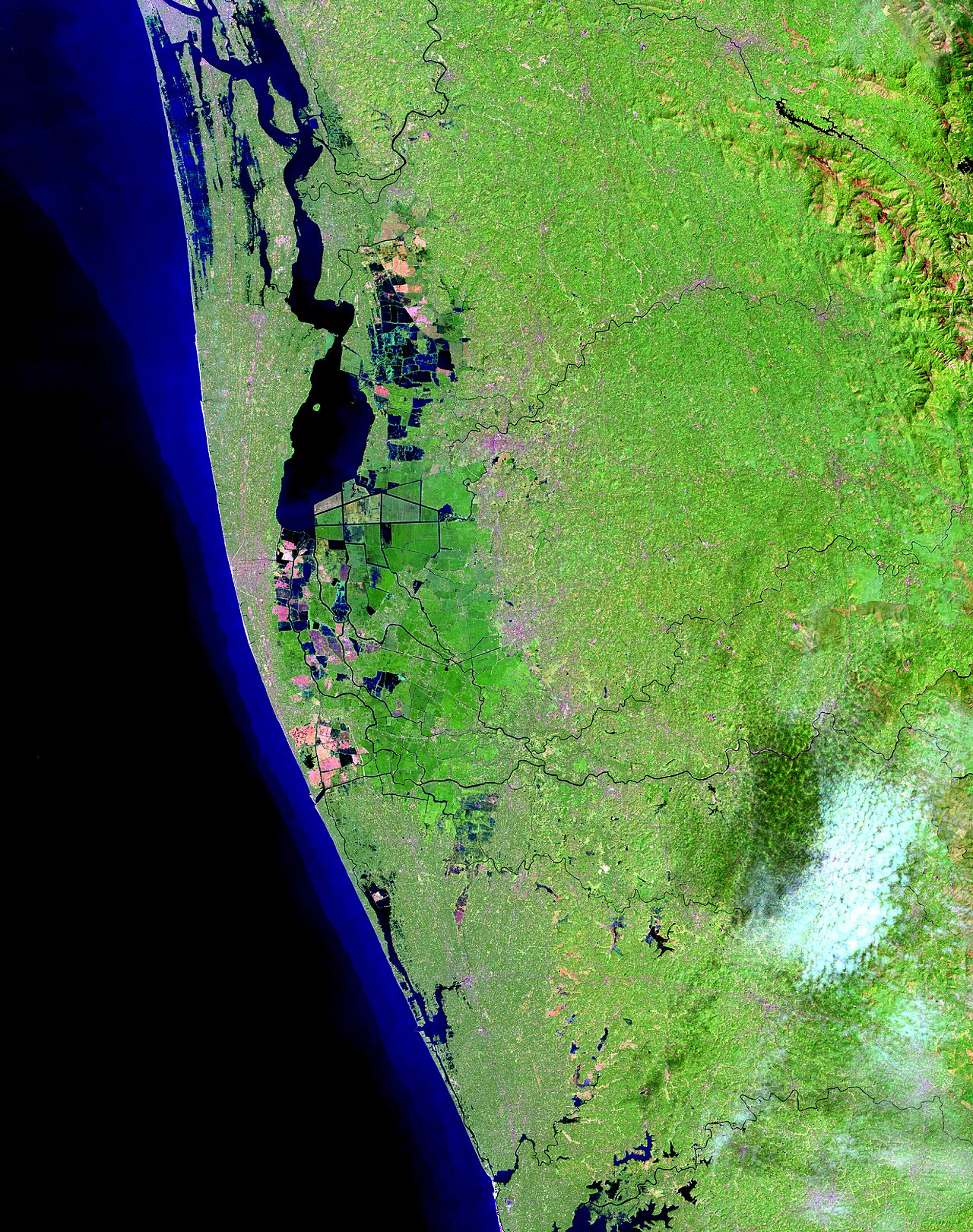
Kerala is a state on India's south-western coast, formed on 1 November 1956 under the States Reorganisation Act by merging the Malayalam-speaking territories of Travancore-Cochin with the Malabar district and Kasaragod. It carries 33.4 million people (2011 Census) across 14 districts and 38,852 sq km, sends 20 members to the Lok Sabha, and legislates through a unicameral 140-member Legislative Assembly, the Kerala Niyamasabha. Its distinctive position in the Republic is a high-human-development, high-consumption economy — per capita GSDP well above the national average, near-universal literacy — run on a structurally strained budget in which salaries, pensions and interest absorb roughly three-quarters of revenue receipts.
Updated
- Capital
- Thiruvananthapuram
- Formed
- 1 November 1956 (States Reorganisation Act, 1956)
- Legislature
- Unicameral — Kerala Legislative Assembly (Niyamasabha), 140 seats; 16th Assembly in session
- Lok Sabha seats
- 20
- Population (2011 Census)
- 33,406,061
- Districts
- 14
- Literacy (2011 Census)
- 94.00% — the highest among Indian states
- Sex ratio (2011 Census)
- 1,084 females per 1,000 males
- GSDP (2026-27 BE)
- Rs 16,29,073 crore at current prices
Role
Kerala is a federal actor of the second rank by size and the first rank by social indicators. It was assembled on 1 November 1956 out of Travancore-Cochin, the Malabar district and Kasaragod — a linguistic state built from a princely-state core and a Madras Presidency periphery, a seam that still shows in its administrative and political geography. It governs 33.4 million people (2011 Census) across 14 districts through a unicameral 140-member Legislative Assembly, the Niyamasabha, and sends 20 members to the Lok Sabha. Having no Legislative Council, its legislative process is short: a bill passes one chamber and goes to the Governor, which makes the assent question a direct point of contact — and periodically of friction — between an elected state government and a Union-appointed office. Within the State List it runs the police and law and order, land and land revenue, agriculture, public health and education, and it has pushed an unusually large share of that machinery down to panchayats and municipalities since the decentralisation drive of the mid-1990s.
What makes Kerala structurally distinctive is the gap between what it achieves and what it can afford. It records the highest literacy of any Indian state at 94.00% and a sex ratio of 1,084 women per 1,000 men, both far above national figures, and its per capita GSDP — Rs 3,17,723 in 2025-26 against an all-India Rs 2,11,725 — reflects a high-consumption, services- and remittance-linked economy rather than a large industrial base. That model is carried on a tight budget. In 2026-27 the state projected a GSDP of Rs 16,29,073 crore, but salaries, pensions and interest committed 72% of estimated revenue receipts, with interest payments alone climbing from 17% of revenue receipts in 2011-12 to 23% in 2024-25, and the fiscal deficit target of 3.5% of GSDP following a revised 3.8%. Only 29% of revenue receipts come from the Centre, so the terms of Union transfers and of the state’s borrowing headroom bear directly on whether the social infrastructure it has built stays funded — which is why fiscal federalism, rather than any single sector, is the axis on which Kerala’s relationship with the Centre turns.
Desk maintained by IndiaStand editorial cycles. Officeholders are transient; this dossier tracks the institution.
Timeline since 1947
- reference
Kerala formed under the States Reorganisation Act
The Malayalam-speaking territories of Travancore-Cochin were merged with the Malabar district and Kasaragod to create the State of Kerala on linguistic lines. The state legislates through a single chamber; no Legislative Council was retained.
- reference
First Assembly election; first elected ministry
The first general election to the Kerala Legislative Assembly returned a communist-led ministry — among the earliest instances of a communist party taking office through the ballot anywhere. The ministry was dismissed in 1959 under Article 356, an early precedent in Centre-state relations.
- reference
People's Plan Campaign and devolution to local bodies
Following the 73rd and 74th Constitutional Amendments, Kerala devolved a substantial share of its plan outlay and functionaries to panchayats and municipalities, making local government a working tier of expenditure rather than an advisory one.
- official
Kerala floods
The severest floods in the state in nearly a century displaced large populations across most districts and reshaped state disaster administration. The Kerala State Disaster Management Authority, constituted under the Disaster Management Act, 2005, expanded early-warning, landslide and urban-flood mitigation work in the years that followed.
- reference
Fifteenth Assembly constituted
The 2021 general election returned the incumbent front to office for a second consecutive term, breaking the state's long-standing pattern of alternation between its two coalitions at every election since 1980.
- reference
Budget 2025-26: per capita GSDP above the national average, deficit targeted at 3.2%
Per capita GSDP was estimated at Rs 3,17,723 against an all-India Rs 2,11,725. The state targeted a fiscal deficit of 3.2% of GSDP against a revised 3.5% in 2024-25, with revenue deficit at 1.9%, and raised basic land tax rates by 50%.
- official
Sixteenth Assembly constituted after the 2026 general election
The Kerala general election of 2026 returned the Sixteenth Kerala Legislative Assembly, which is in session. A new Council of Ministers took office; the state portal lists the incoming Chief Minister and the serving Governor.
- reference
Budget 2026-27: committed expenditure at 72% of revenue receipts
GSDP was projected at Rs 16,29,073 crore and expenditure at Rs 2,27,567 crore, with a fiscal deficit target of 3.5% of GSDP against a revised 3.8% for 2025-26. Salaries, pensions and interest account for 72% of estimated revenue receipts; interest payments alone rose from 17% of revenue receipts in 2011-12 to 23% in 2024-25. Central transfers fund 29% of revenue receipts.
Frequently asked
- What is Kerala?
- Kerala is a state on India's south-western coast, formed on 1 November 1956 under the States Reorganisation Act by merging the Malayalam-speaking territories of Travancore-Cochin with the Malabar district and Kasaragod. It carries 33.4 million people (2011 Census) across 14 districts and 38,852 sq km, sends 20 members to the Lok Sabha, and legislates through a unicameral 140-member Legislative Assembly, the Kerala Niyamasabha. Its distinctive position in the Republic is a high-human-development, high-consumption economy — per capita GSDP well above the national average, near-universal literacy — run on a structurally strained budget in which salaries, pensions and interest absorb roughly three-quarters of revenue receipts.
- When was Kerala established?
- Kerala was established 1956-11-01.
- What does Kerala do?
- Its remit covers State List subjects: law and order and the state police, land and land revenue, agriculture, public health, and school and higher education, A three-tier panchayati raj and urban local body system to which the state has devolved an unusually large share of plan funds since the 1990s decentralisation drive, A unicameral legislature — Kerala has no Legislative Council, so bills pass in a single chamber before going to the Governor, State-run public distribution, health and social security infrastructure that carries a large committed-expenditure load, A long coastline and fisheries economy, plantation agriculture, and a remittance-linked consumption base.
- What is the latest on Kerala?
- As of 2026-07-17: Budget 2026-27: committed expenditure at 72% of revenue receipts. GSDP was projected at Rs 16,29,073 crore and expenditure at Rs 2,27,567 crore, with a fiscal deficit target of 3.5% of GSDP against a revised 3.8% for 2025-26. Salaries, pensions and interest account for 72% of estimated revenue receipts; interest payments alone rose from 17% of revenue receipts in 2011-12 to 23% in 2024-25. Central transfers fund 29% of revenue receipts.
Official sources
The government's own pages for this institution — go straight to the primary.
-
State government's official portal; lists the Governor and the Council of Ministers.
kerala.gov.in/
- Kerala Niyamasabha (Legislative Assembly) legislation
Assembly proceedings, bills, questions and archives from 1888 onwards; currently the 16th Assembly.
www.niyamasabha.org/
-
Electoral rolls and conduct of Parliament and Assembly elections in the state.
ceo.kerala.gov.in/
-
Annual review of the state economy; editions archived from 2016 to 2025.
spb.kerala.gov.in/economic-review
- Kerala State Disaster Management Authority department
Statutory authority under the Disaster Management Act, 2005; early warning and response for floods, landslides and coastal erosion.
sdma.kerala.gov.in/