State / UT
Punjab
Punjab is a border state of the Indian Union, constituted in its present form on 1 November 1966 when the Punjab Reorganisation Act split the earlier state into a Punjabi-speaking Punjab, a new state of Haryana, hill areas transferred to Himachal Pradesh, and Chandigarh as a Union Territory. It had 27,743,338 residents at the 2011 Census, returns 13 members to the Lok Sabha and 7 to the Rajya Sabha, and legislates through a unicameral 117-seat Vidhan Sabha that has sat in Chandigarh since 1961. Its projected GSDP for 2025-26 is Rs 8,91,301 crore. What structurally defines Punjab is that it does not exclusively own its own capital — Chandigarh remains a Union Territory serving as the shared capital of both Punjab and Haryana — and that its river waters, its border, and its grain economy each place it in permanent negotiation with the Union.
Updated
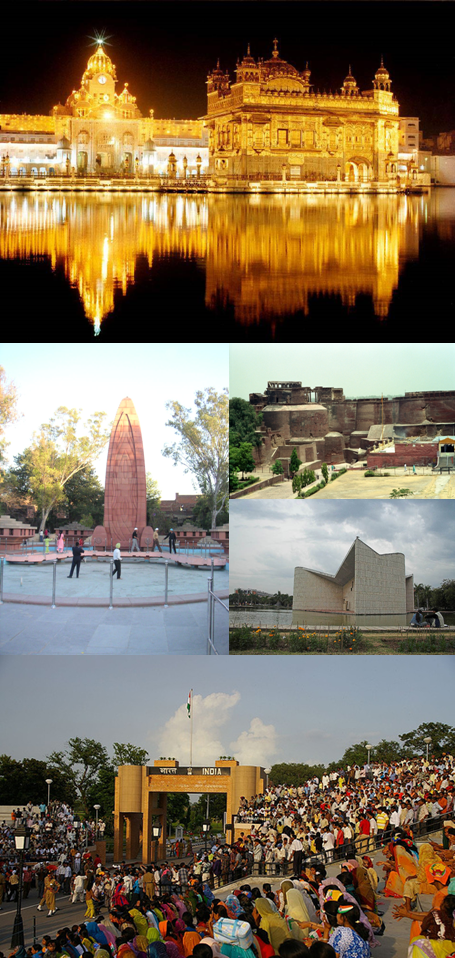
- Capital
- Chandigarh (a Union Territory, shared with Haryana)
- Formed
- 1 November 1966 (Punjab Reorganisation Act, 1966)
- Legislature
- Unicameral — Punjab Vidhan Sabha, 117 seats, five-year term
- Lok Sabha seats
- 13
- Rajya Sabha seats
- 7
- Population (2011 Census)
- 27,743,338
- Districts
- 23
- GSDP (2025-26, projected)
- Rs 8,91,301 crore
- High Court
- Punjab and Haryana High Court, Chandigarh
Role
Punjab is a state of the Indian Union with a unicameral legislature of 117 seats, a Council of Ministers responsible to that assembly and headed by the current Chief Minister, and a Governor appointed by the Centre in whom the assent power under the Constitution vests. It sends 13 members to the Lok Sabha and 7 to the Rajya Sabha, making it a mid-weight state in Parliament — its influence on national policy has historically run through what it grows and where it sits rather than through its numbers in the lower house. Its projected GSDP for 2025-26 is Rs 8,91,301 crore, and its fiscal position is structurally tight: the 2025-26 budget bridges a Rs 34,201 crore gap with Rs 31,701 crore of net borrowing while repaying Rs 89,449 crore of existing debt in the same year. The state shares the Punjab and Haryana High Court with its neighbour, and it does not own its own capital — Chandigarh has been a Union Territory since 1966, administered by the Centre and serving both states.
Three unresolved settlements define Punjab’s relationship with the Union, and all three date to the reorganisation or its aftermath. The first is Chandigarh: promised to Punjab by the Rajiv-Longowal Accord of 24 July 1985 with a transfer date of 26 January 1986, the handover never occurred, and the capital remains a Union Territory. The second is river water: the Eradi Tribunal’s 1987 allocation and the Supreme Court’s decrees on the Sutlej-Yamuna Link canal have not produced a completed canal, and the assembly’s 2004 attempt to terminate the underlying agreements by statute was held unconstitutional on 10 November 2016. The third is the border — Punjab’s frontier with Pakistan places central armed police forces inside the state’s territory alongside a police force that is a State List subject, so the operational line between Union and state authority over policing is drawn here more sharply than in most states. Layered on these is the grain question: Punjab’s wheat and paddy move into the central pool through state-administered mandis under a centrally-set minimum support price, which makes the terms of procurement a Union decision with direct consequences for state revenue and rural incomes. The state’s rejection of the 2020 farm laws — resolutions, counter-legislation that did not receive assent, and protests that suspended rail traffic for over two months — was an expression of that dependency rather than an exception to it.
Desk maintained by IndiaStand editorial cycles. Officeholders are transient; this dossier tracks the institution.
Timeline since 1947
- reference
Punjab Reorganisation Act splits the state; Chandigarh made a Union Territory
The Act, passed on 18 September 1966, took territorial effect on 1 November. It carved Haryana out of the Hindi-speaking districts, transferred hill areas to Himachal Pradesh, and made Chandigarh a Union Territory serving as provisional capital of both Punjab and Haryana. The reorganisation closed the Punjabi Suba movement but left Chandigarh, the Punjabi-speaking areas outside the new boundary, and river-water allocation unresolved.
- reference
Legislative Council abolished; Punjab becomes unicameral
The Vidhan Parishad was abolished, leaving the Vidhan Sabha as the state's sole chamber. The assembly has sat at the Palace of Assembly (Vidhan Bhavan) in Chandigarh since 6 March 1961.
- reference
Rajiv-Longowal Accord commits the Centre to transferring Chandigarh
The accord provided for Chandigarh to go to Punjab with Hindi-speaking villages transferred to Haryana in exchange, a commission on further boundary questions, and a Supreme Court judge to head a tribunal on Ravi-Beas waters. The Chandigarh transfer, scheduled for 26 January 1986, never took place. The Eradi Tribunal reported in January 1987, allocating Punjab 5.00 million acre-feet and Haryana 3.83 million acre-feet.
- reference
President's Rule; elected government restored in 1992
Punjab was placed under President's Rule and governed from Delhi through the peak years of the insurgency, following an earlier imposition in October 1983. Elections restoring an elected state government were held in 1992. The period is the state's longest suspension of representative self-government since 1966.
- reference
Vidhan Sabha terminates its river-water agreements by statute
After Supreme Court directions in 2002 and 2004 to complete the Sutlej-Yamuna Link canal, the Punjab assembly enacted the Punjab Termination of Agreements Act, abrogating the state's water-sharing agreements with neighbouring states. The President referred the Act to the Supreme Court. It is the clearest instance of a state legislature attempting to legislate its way out of an inter-state settlement.
- reference
Supreme Court holds the 2004 termination law unconstitutional
Answering the Presidential Reference, the Court declared Punjab's 2004 Act illegal. The canal remains incomplete on the Punjab side while Haryana's section is built; the dispute continues under the Court's supervision. Punjab's asserted position is that it has no surplus water to spare; Haryana's is that the decrees stand. IndiaStand does not adjudicate between them.
- reference
State counter-legislation against the central farm laws; assent withheld
Punjab was one of six states to pass resolutions against the three central farm acts and one of three to table counter-legislation in its assembly. None of the counter-legislation received the Governor's assent. Punjab was the epicentre of the protests, with rail services suspended in the state for more than two months. Parliament passed the Farm Laws Repeal Bill on 29 November 2021.
- reference
16th Vidhan Sabha constituted after a 92-seat sweep
Polling was held on 20 February 2022 with 72.15% turnout, down 5.05 points from 2017. The Aam Aadmi Party won 92 of 117 seats, the Indian National Congress 18 and the Shiromani Akali Dal 3 — the widest single-party margin in the state since reorganisation, and the first time the state's two established formations were both displaced. The assembly's five-year term runs to March 2027.
- reference
Budget 2025-26 sets GSDP at Rs 8,91,301 crore against a 3.8% fiscal deficit
Projected GSDP for 2025-26 is Rs 8,91,301 crore, 10% above 2024-25. Expenditure excluding debt repayment is Rs 1,46,632 crore against revenue receipts of Rs 1,12,431 crore, with net borrowings of Rs 31,701 crore bridging the gap and Rs 89,449 crore repaid in debt during the year. The fiscal deficit target is 3.8% of GSDP, down from a revised 4.5% in 2024-25.
Frequently asked
- What is Punjab?
- Punjab is a border state of the Indian Union, constituted in its present form on 1 November 1966 when the Punjab Reorganisation Act split the earlier state into a Punjabi-speaking Punjab, a new state of Haryana, hill areas transferred to Himachal Pradesh, and Chandigarh as a Union Territory. It had 27,743,338 residents at the 2011 Census, returns 13 members to the Lok Sabha and 7 to the Rajya Sabha, and legislates through a unicameral 117-seat Vidhan Sabha that has sat in Chandigarh since 1961. Its projected GSDP for 2025-26 is Rs 8,91,301 crore. What structurally defines Punjab is that it does not exclusively own its own capital — Chandigarh remains a Union Territory serving as the shared capital of both Punjab and Haryana — and that its river waters, its border, and its grain economy each place it in permanent negotiation with the Union.
- When was Punjab established?
- Punjab was established 1966-11-01.
- What does Punjab do?
- Its remit covers State List subjects: law and order and the state police, land and land revenue, agriculture and irrigation, public health, and school education, Procurement and mandi administration for wheat and paddy through the state agencies that feed the central pool, A 117-seat unicameral legislature; the Legislative Council was abolished on 1 January 1970, Shares its capital, its High Court and its river-water headworks with Haryana under post-1966 arrangements, Administers an international border with Pakistan, within which central armed police forces also operate.
- What is the latest on Punjab?
- As of 2026-07-17: Budget 2025-26 sets GSDP at Rs 8,91,301 crore against a 3.8% fiscal deficit. Projected GSDP for 2025-26 is Rs 8,91,301 crore, 10% above 2024-25. Expenditure excluding debt repayment is Rs 1,46,632 crore against revenue receipts of Rs 1,12,431 crore, with net borrowings of Rs 31,701 crore bridging the gap and Rs 89,449 crore repaid in debt during the year. The fiscal deficit target is 3.8% of GSDP, down from a revised 4.5% in 2024-25.
Official sources
The government's own pages for this institution — go straight to the primary.
-
State portal: departments, districts, gazette, grievance redressal.
punjab.gov.in/
- Punjab Vidhan Sabha legislation
The 117-seat unicameral legislature, sitting at Vidhan Bhavan, Chandigarh.
punjabassembly.gov.in/
-
Electoral rolls and assembly/parliamentary constituency data for the state.
ceopunjab.gov.in/
- Punjab Data Portal data
State open-data holdings published under the national data portal.
punjab.data.gov.in/
-
Independent read of GSDP, expenditure and the fiscal deficit.
prsindia.org/budgets/states/punjab-budget-analysis-2025-26